
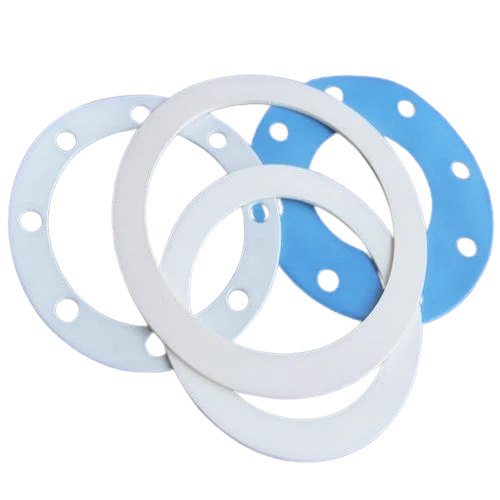
PTFE Gasket
PTFE (Polytetrafluoroethylene) gaskets are widely used in various industries due to their excellent chemical resistance and thermal stability. Here are some key points about PTFE gaskets
Composition
Material: : Made from polytetrafluoroethylene, a high-performance fluoropolymer known for its non-stick properties and chemical inertness.
Forms: PTFE gaskets can be found in various forms, including solid sheets, expanded PTFE, and gaskets that incorporate fillers for added strength.
Features
Chemical Resistance: Highly resistant to a wide range of chemicals, making them ideal for corrosive environments.
Temperature Tolerance: Can withstand high temperatures, typically up to around 260°C (500°F).
Non-Stick Surface: The non-adhesive nature helps prevent sticking to mating surfaces, facilitating easier removal and maintenance.
Considerations
Installation: Proper installation is crucial to ensure effective sealing. Over-compression can lead to deformation.
Cost: PTFE gaskets can be more expensive than other materials, but their longevity and effectiveness often justify the investment.
Expansion: They may expand under certain conditions, which should be taken into account during design and installation.
Applications
Industrial Use: Commonly used in the chemical processing, pharmaceutical, food and beverage, and semiconductor industries.
Flange Connections: Suitable for sealing flanges, valves, and other critical joints.
Advantages
Versatility: They can be used in various applications and are available in different sizes and configurations.
Ease of Installation: Typically easy to install and can be reused if not damaged during disassembly.