
Graphite Gasket
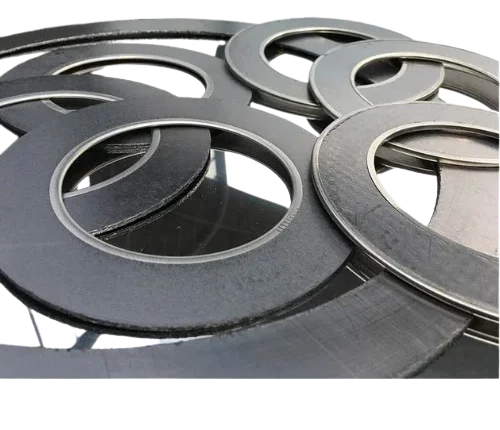
Graphite gaskets are widely used in various industrial applications due to their excellent sealing properties and high thermal resistance. Here’s a detailed overview:
Composition
Material: Made primarily from flexible graphite, which is derived from natural graphite flakes. Some gaskets may also include a metal backing or other fillers for added strength.
Forms: Available in sheets, rings, or custom shapes depending on the application.
Features
Temperature Resistance: Capable of withstanding extreme temperatures, often up to around 450°C (840°F) or higher, depending on the specific formulation.
Chemical Resistance: Highly resistant to many chemicals, making them suitable for corrosive environments, though they may be vulnerable to strong oxidizers.
Flexibility: Graphite’s inherent flexibility allows it to conform to irregular surfaces, ensuring a tight seal.
Considerations
Installation: Proper installation is crucial to prevent damage. Over-tightening can cause crushing and lead to loss of sealing capability.
Environmental Factors: Graphite can be sensitive to certain conditions, such as exposure to strong oxidizing agents, which can compromise its integrity.
Cost: Generally competitively priced, but the specific formulation and additional features (like metal reinforcement) can affect cost.
Applications
Industrial Use: Commonly used in the oil and gas, petrochemical, power generation, and water treatment industries.
Flange Connections: Ideal for sealing flanged joints, particularly in high-pressure and high-temperature applications.
Advantages
Excellent Sealing Performance: Provides reliable sealing, minimizing the risk of leaks in critical applications.
Durability: Offers good resistance to wear and is less prone to degradation over time compared to other gasket materials.
Thermal Conductivity: Good thermal conductivity can help dissipate heat in high-temperature applications.